

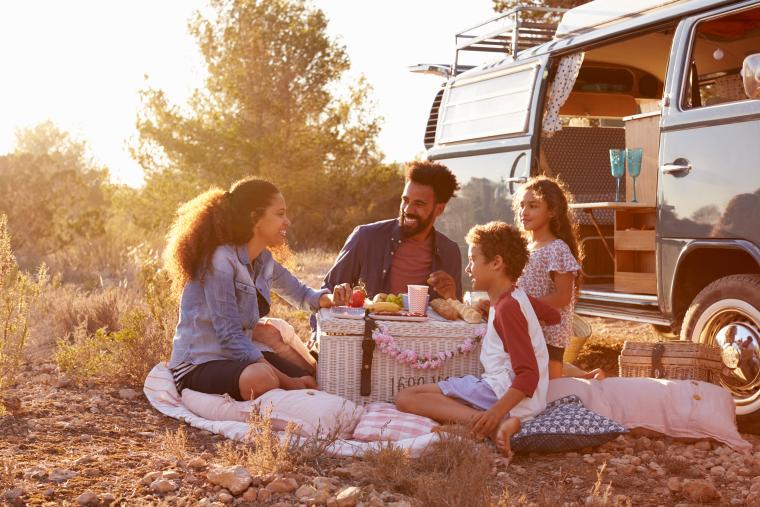
1. Go Back in Time
Modern day travelers would be considered extravagant by earlier generation standards from constant restaurant eating to short haul domestic flights. One way to approach a vacation in this post-COVID time is to go back a generation and consider more modest travel means from picnic roadside meals to road trips instead of plane, train, and bus tours. In today’s environment, a car is your personal bubble – and has most of the amenities you would want while traveling – allowing you to limit exposure to your travel companions.
2. Don’t Let Lightning Strike
During severe thunder storms, staying in a car can be a safe haven. According to the National Weather Service, if you hear thunder or see lightning, move to safe shelter defined among other places as a “metal-topped vehicle with windows up.” In these times, it’s can be helpful to consider the threat of a contagin like COVID as a never-ending lightning storm. If you aren’t staying sheltered in place then stay sheltered in your space – ideally a car, truck or RV. Although part of the joy of traveling is getting out to see the sights, the new rule of thumb is to stay in your vehicle as much as possible while seeing sights out of the windshield.
3. Channel The Lone Ranger
When you are out on the open road you never know whom you’ll encounter. For your own sake, but also for the comfort of those you meet along the way, wear a mask. Masks are always good to have at hand, just in case. , for instance, to board the Cape May-Lewes Ferry.
Who is that Masked Man? In these times, it should be all of us not just the Lone Ranger. Like the Lone Ranger’s mask, people consider masks a symbol of good – good hygiene. You’re no longer treated like a pariah if you are the only one in a room with a mask, it’s understood in 2026.
4. We’re All in The Wild West
Things that may have been acceptable in your home or on the road before, may not be ok today including hugging people when you arrive somewhere; being up close, personal and friendly to people you meet on the road (they likely want you to keep your distance); or crowding to get closer to the front of a line. Keeping a polite distance from people in front of you as you approach ticket counters, concierge desks, or other travel assistance services is considered the norm.
5. Assume Closed Quarters
Pre-pandemic we Americans were used to many services being open at all hours. Now we have to check before we head out. Even though the pandemic ended many places have kept those adjusted hours. As you travel, assume that many facilities are operatins on reduced hours, or require reservations. Several RVers, for instance, have been caught off guard with closed camp grounds or limited office hours as they traveled around the country. Many hospitality services have kept the smaller staff and reduced hours resulting from the peak pandemic lockdown.
6. Don’t Travel Light
Traveling light has become a badge of honor for many passengers particularly in the era of airline travel and baggage fees. However, the beauty of car travel is the ability to fill the trunk, glove compartment, and open seats with provisions for all types of circumstances. With many stores having limited supplies, it’s advisable to not only travel with your own food, but paper supplies and other necessities.
Road trip necessities include freshly stocked first aid kits for the car; coolers for medications, baby milk and other perishable items; and electric beverage warmers that can run off of car attachments. Stocking up means being prepared on the road.
Part of the allure of the open road has always been the serendipity of the experience, planning ahead is a good protocol to make sure you’re not caught off guard, can remain healthy and safe.
BONUS TIP
Make use of any resources to alleviate road fatigue. That includes napping at rest stops, and using drive-on services such as the Cape May-Lewes Ferry that allow you to relax and move forward in your vehicle while not having to do all the driving!