Why The Ferry Is On So Many Bucket Lists


6 Ideas for Your Personal Bucket List

In olden times buckets and water adventures always went together, but for negative reasons — you always needed a way to bail out!  Happily, today, when we talk of buckets and bucket lists, it’s to give people a desired experience that they want to have.  At the Cape May-Lewes Ferry, numerous passengers each year tell us that the trip is on their bucket list, for a wide variety of reasons. Here are a few we’ve heard to date:

  • Traveling all 50 states, and this seemed a different way to get to Delaware. 
  • Wanted to travel all of route 9, including the water portion of the route.
  • Always took it as a child and wanted to experience it as an adult. 
  • Just got married and wanted my sweetheart to see where I grew up and how we used to visit relatives in New Jersey.
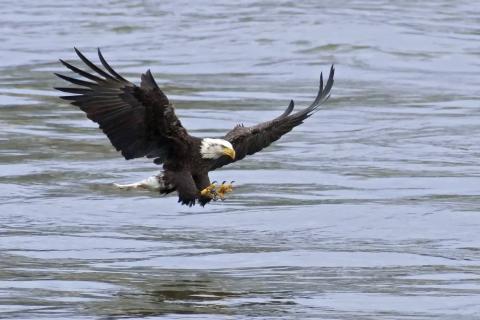
  • Wanted to tick off birds on my bird watching bucket list, and in a new way — on the water!

And then, people tell us that they come aboard just to experience more scenic touring, as the Cape May-Lewes Ferry is an exciting (and in most cases, efficient) addition to any East Coast adventure. Transporting travelers between two iconic East Coast destinations – the New Jersey Shore and the Delaware Beaches – the Ferry prevents a long drive around the Delaware Bay and hectic travel via the often-congested highways through Baltimore and D.C. 
Image
Bald Eagle

Don’t have a Delaware Bay bucket list yet? No problem! Here are 6 suggestions for starting one:  

  1. Bike through historic Cape May, NJ, making sure you stop by the Cape May Lighthouse and climb to the top for the 360-degree views.
  2. Tackle more than eight miles of scenic bike trails at Cape Henlopen State Park in Delaware
  3. Catch one of the best sunsets on the east coast at Sunset Beach, while also witnessing a piece of history – the Atlantus, a sunken ship from WWI.
  4. Continue south of Lewes to soak up the sun and enjoy food and amusement on Ocean City Maryland’s wooden boardwalk.
  5. Visit Naval Air Station Wildwood in  Cape May County, NJ’s answer to the Smithsonian, and find out why despite it’s name, it’s never been in Wildwood!
  6. Visit all zoos in the country, including the Cape May County Zoo!

Whether you’re an eco-tourist, historic buff, or beach aficionado, there is a Delaware Bay bucket list that can be tailored for just about any interest. 
DOLPHINS & WHALES

OH THE THINGS YOU'LL SEE

Travel Stories: a Cape May-Lewes Adventure

A Trip for the Books! 

Although one might not realize it at first glance, the Cape May-Lewes Ferry serves as a melting pot of travelers, adventurers, and folks from all walks of life. With hundreds of thousands of passengers sailing annually, each individual is on a unique journey and has their own purpose for riding the Ferry. Christy Carlson, a recent ferry passenger, happily shared her family’s experience travelling with the Cape May Lewes Ferry.
 
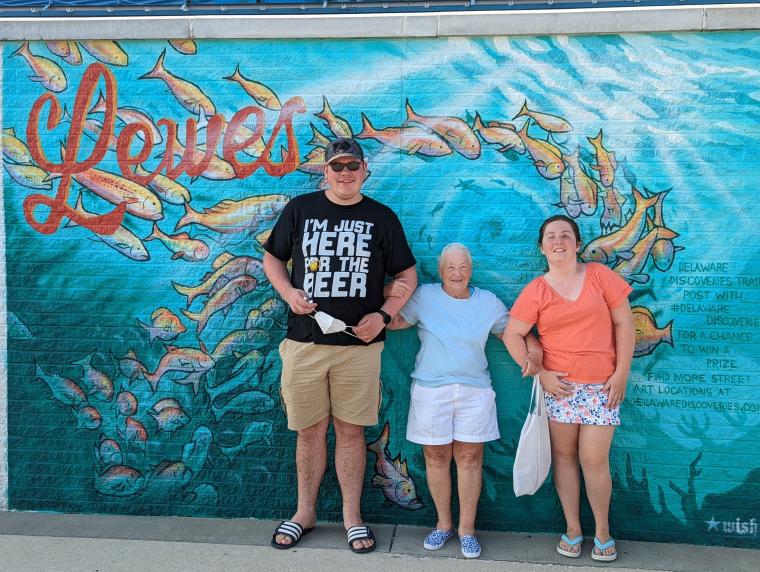
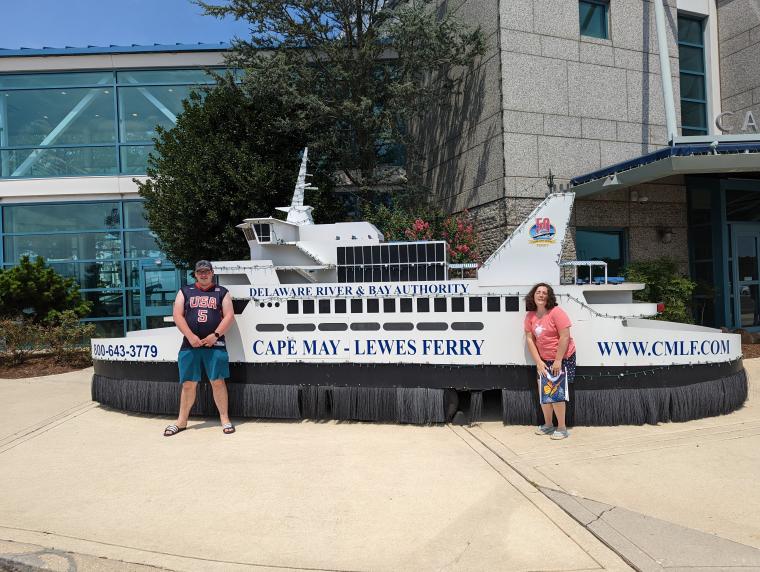
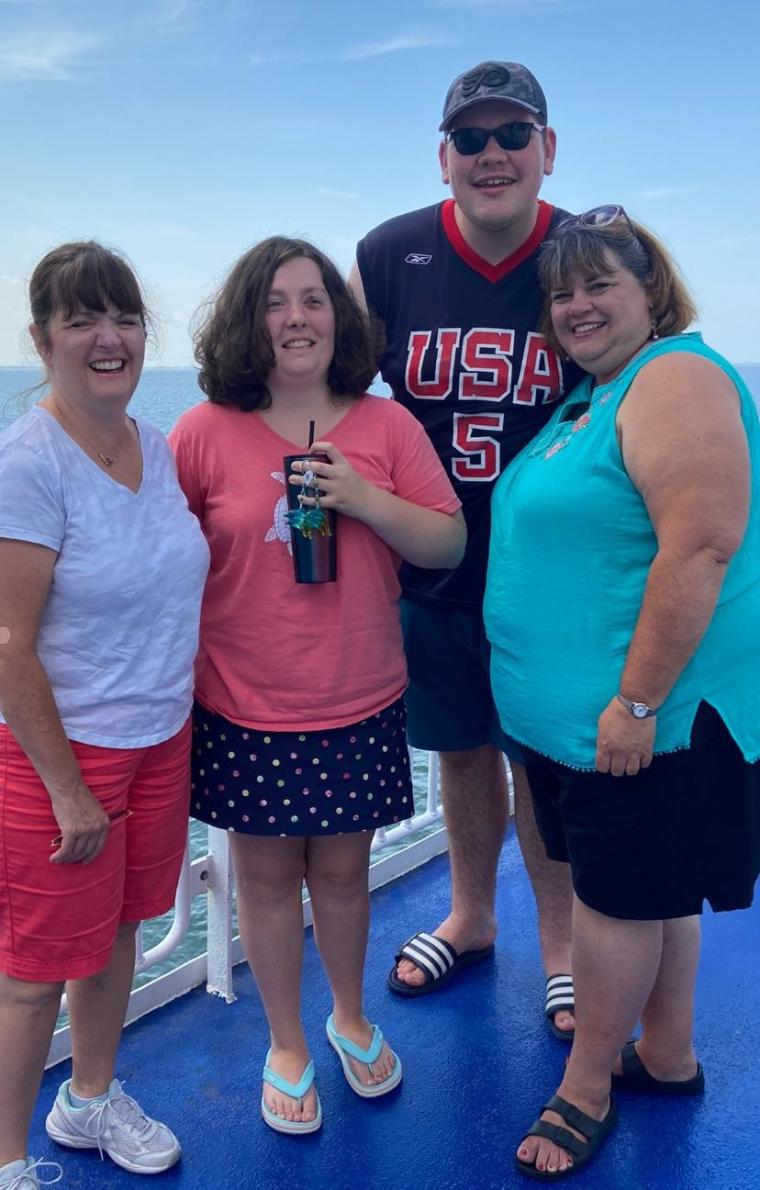
Image from Carlson-Muldowney party, four people posing

Christy’s party included four people – herself, her son Erik, Jillian, Erik’s girlfriend, and Jillian’s mother, Nancy. Erik and Jillian, both 21 and special needs, have been dating for 5 years. Kicking their trip off, the group visited Erik’s grandmother in York, PA. While in town, they were able to do some shopping and even spent some time at the York State Fair.

The second leg of their jaunt led them right to our backyard! Both of Jillian’s grandmothers reside in Lewes, so the four had the opportunity to explore our favorite waterfront town. While in Lewes, they did it all. Stopping at the beach at Cape Henlopen State Park, fishing on the bay, and thrifting are just some of the activities the gang got up to. Prior to this experience, Erik and Christy had never been to Lewes.

 
Erik and Grandma Joan in Lewes

After spending two days in Lewes, it was time to cross the Delaware Bay and head into Cape May! The Carlson family has roots in Cape May, as Christy grew up with her grandparents living in Wildwood Crest – “We have a picture of my dad watching the ferry as it was being built,” she shared. The last time Christy rode the Ferry was over 30 years ago, around when she was in college. Jill had been on the Ferry once before, but this trip would be Erik’s first time. Erik, who has autism, loves all transportation modes, so he was especially excited to experience the Ferry.

“Visiting Lewes was a really great experience, it was a treat to go!”

While at the Lewes terminal, the party of four sat down for a bite to eat at Grain on the Rocks. Seated outside on the deck, they were able to watch the Ferry arrive and depart – which is always one of the top terminal sights to see! Live music was taking place on the lawn, adding to the atmosphere. Before leaving, they made sure to explore the rest of the terminal and stopped at the gift shop.

 
Erik and Jill at the Cape May terminal

The trip was nothing but smooth sailing. On board, the party was able to chat it up with passengers and crew, leaving them impressed with the variety of people cruising the bay alongside them. Families and travelers of all shapes and sizes can be found aboard the vessel at any given time; the group recalled meeting a special needs woman whom they were able to connect with during the crossing. Upon arriving in Cape May, Jill and Erik had the opportunity to reconnect with a former aide from their high school days.

“Everyone knows how great the Ferry is, it’s really something special.”

After sharing her family’s story, Christy expressed her appreciation for the Cape May-Lewes Ferry, emphasizing that one trip aboard the Ferry is more than just that – one crossing will leave you with a handful of stories, laughs, and new friends from all corners of the world. Because of this, the Cape May-Lewes Ferry is much more than a mode of transportation; it serves as an asset to the surrounding communities. “It’s time to rediscover the Ferry, to show the next generation what it’s all about!” exclaimed Christy.

 
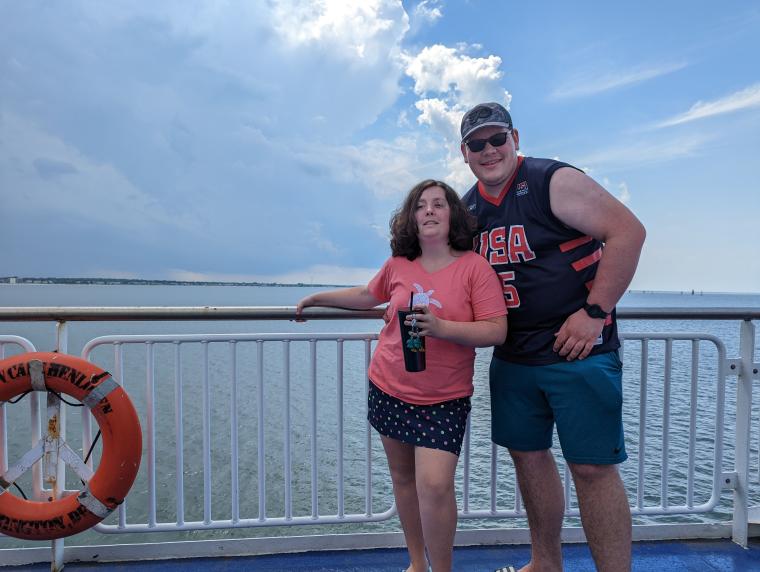
Erik and Jill aboard the Ferry

Erik’s first Ferry ride was a success, and the group had an overall awesome time. The four did the Delaware bay the best way: visiting loved ones, exploring Cape May and Lewes, and sailing aboard the Ferry shapes up to be the perfect getaway. Thanks to Christy, Erik, Jill, and Nancy for traveling with the Cape May-Lewes Ferry!

Ready To Sail?

The Road to the Ferry: Lewes

Which Road Should I Take to the Ferry in Lewes?

As with most destinations in life, there are a few ways to get where you’re going, and that’s also true for the Ferry terminal in Lewes, Delaware. You can go through the town of Lewes, but you can also by-pass the town and get to the Ferry via Freeman Highway, a route that is a bit different from standard state roads, and has an interesting history. And, as with most things related to the Delaware River & Bay Authority, the operating Authority for the Cape May-Lewes Ferry, the history has both aviation and maritime overtones with a touch of bridging the past to the present.

How Did the Highway Get It’s Name?

Freeman Highway is named after Theodore “Ted” Freeman, an aeronautical engineer, USAF test pilot, and NASA astronaut. Captain Theodore Freeman grew up in Lewes, Delaware to a family of farmers and carpenters. He worked part-time at local air fields refueling planes and doing maintenance to earn pocket money, which he largely spent  taking plane rides and on flying lessons. Once he gained his pilot’s license at age 16, he used his entrepreneurial skills to help commercial fishermen by spotting fish for them from the air. By the time Freeman graduated high school he had applied to the US Naval Academy.

For More on Ted Freeman: The Man Behind The Highway

Captain Freeman died in an aviation accident in 1964, the same year the Ferry began operations. Almost immediately, the Ferry Access road being built by the DRBA was slated to become Freeman Highway in honor of the local hero. On December 21, 1965, the Delaware State Senate formalized the name by resolution and Freeman Highway opened as a Delaware extension of Rt. 9 in 1966.  An historical plaque is located at the corner of the Lewes Terminal and was dedicated to Ted Freeman on June 18, 2014 as part of the 50th anniversary of the Ferry.

Related Story: The Road to the Ferry: Cape May

Who Handles Road Maintenance?

Similar to how the DRBA maintains the Ferry approach roads in Cape May, the Authority has responsibility for Freeman Highway operations, which represent approximately 1.5 miles of roadway. By agreement with local officials, the DRBA built the two-lane road in 1964 as a by-pass to alleviate potential traffic clogs through the center of Lewes. Today, Freeman Highway remains a DRBA road maintained by the Ferry and the DRBA and not the Delaware Dept. of Transportation, like most of the surrounding roadways.

The lanes were originally constructed in concrete and the highway still has a concrete base now sealed with an asphalt top that effectively extended the initial 50-year life of the concrete. Although the asphalt helped protect the concrete bed underneath, it had a life expectancy of 20 years, and is now due for an upgrade. Since asphalt is weather sensitive, the work is ideally done in warmer weather months and is expected to begin on March 27 and be completed in two months — or mid-May — in time for the launch of the Summer 2022 travel season on Memorial Day Weekend.

To update the road, DRBA engineering teams and contractors will mill down 3 inches of  asphalt and patching concrete as needed. “Our goal is to minimize lane closures,” commented DRBA Project Engineer Brent Van Lith. Van Lith noted that most of the work will be done at night or at hours that have little impact on Ferry traffic.

“Unlike standard road projects, we take Ferry traffic into account,” Van Lith added. Freeman Highway was created specifically as a Ferry Access road, although today, it  is also used by many other travelers between Cape Henlopen State Park, beach homes and King’s Highway. The full project is estimated to cost the DRBA  $1,077,777.

Check Out The Latest Edition of the Twin Capes Traveller!

The Road to the Ferry: Cape May

Which Road Should I Take to The Ferry in Cape May?

This is a common question received by the customer service phone teams at the Cape May-Lewes Ferry, but the answer is not as simple as you might think. You could take either Lincoln Boulevard, Rt. 9, Ferry Road, or Sandman Boulevard to get to the Ferry. That’s because each are different names for the same stretch of road! 

Which name you use can say a lot about you. It can either date you, determine how local you are, or show if you’re a devotee of Waze or Google Maps for getting directions. Here’s a bit of local history to help untangle the road’s multiple labels.

Maritime Importance of Route 9

Depending on your direction of travel, the road is considered the beginning or end of Route 9 in New Jersey. According to one article from NJ.com, Rt. 9 is New Jersey’s liveliest highway, and when traveled in its entirety through the state provides the best representation of everything Jersey.

It starts, when traveling south, from the George Washington Bridge and ends at the Cape May-Lewes Ferry. What many people don’t realize, however, is that Rt. 9 doesn’t end at the Delaware Bay at all but continues as a maritime route connected by none other than the Cape May-Lewes Ferry! In August 2021, the route received a second, official MARAD designation naming the Delaware Bay crossing as part of America’s M95 Marine Highway– the marine equivalent of I-95 on the coast.

Rt. 9 is part of US Highway history as it is one of only two US Highways connected by a maritime component, and the only one connecting a north-south route. The other, Rt. 10, is an east-west highway connected by the SS Badger over Lake Michigan. 

The Sandman Connection

If you’re a local history buff, you may know the name of Charles Sandman, Jr. Born in Philadelphia in 1921, Sandman grew up and was quintessential Jersey. When he graduated from then Cape May High School, he returned to Philadelphia to get his BA from Temple University, but subsequently got his law degree from Rutgers Law School in Newark. He then served in the Army Air Corps in WWII, and was held as a prisoner of war for seven months in Germany.

At age 33 Sandman started his political career, and was elected to three consecutive 4-year terms as the NJ State Senator from Cape May. In the early 1960s, he became a passionate advocate for a ferry to connect South Jersey to southern Delaware helping pave the way to create the current Cape May-Lewes Ferry system that began in 1964.

Soon thereafter, in 1965, Sandman resigned his state post to become the US Congressman for District 1 in NJ and a member of the House Judiciary Committee. There, he received national fame becoming best known as the most prodigious defender of President Richard Nixon during impeachment hearings. Sandman only revoked his support after the revelation of the famous “smoking gun” tape. He ended his career as a chief judge of the family court in Cape May County.

When he died in 1985 at age 64, Sandman’s obituary appeared in The New York Times and Washington Post  in addition to state and local newspapers throughout the region. In honor of all Sandman did for South Jersey and the Ferry, the portion of Rt 9 from the Railroad tracks near Rt. 109 to Bayshore Road was renamed Sandman Boulevard in 1986. A historical marker was placed on the road renaming the segment as Sandman Boulevard.

Several online beach guides from KnowThisPlace.com to Delmarvabeachguide.com list the Ferry’s address as 1200 Sandman Boulevard, but that address was never technically correct as the segment of Rt. 9 from Bayshore Road to the Ferry staging lanes and parking lots is Lincoln Boulevard.  The Ferry’s local address has always been 1200 Lincoln Boulevard in line with post office norms, but mail addressed to 1200 Sandman Boulevard is still delivered as everyone knows what the sender intended.

DRBA Widens Road

Because of its importance as the main access road to the ferry, the Delaware River & Bay Authority (DRBA) has always handled the road’s maintenance all the way from the Ferry to the Rt. 9/Rt.109 intersection. When the DRBA funded new road construction in 2012, it made local news (see headline above), and the historical marker was saved in a DRBA warehouse to protect it from ongoing construction work.

Related Story: The Road to the Ferry: Lewes

When the road reopened, the sign remained in storage. At the Ferry’s 50th anniversary celebrations in 2014, county and DRBA officials agreed to relocate and rededicate the marker in a place with higher visibility and placed it on the Ferry campus adjacent to the terminal in Cape May. It continues to stand there today welcoming visitors to the Ferry grounds with an updated plaque noting its original position.

The picture on the top of this page shows the Sandman family, many of whom still live and work in Cape May County, in attendance at the rededication ceremony.

The Ferry Road Nickname

Given all of the history, it’s clear the road needs no other names but — if you travel around Cape May — it’s not unusual to hear people talk about Ferry Road. It’s basically a nickname referring to the access road from Bay Shore to the Ferry aka Lincoln Boulevard. It’s possible locals started using it because the other three names — Lincoln, Sandman and Rt. 9 — were causing some confusion and the name Ferry Road clearly delineates it as the road that takes you to the Ferry. Where or when this name started is really not known. 

Catch the Best Sunsets in the World

A Bird Named Jazzy


The Killdeer Who Stole The Show

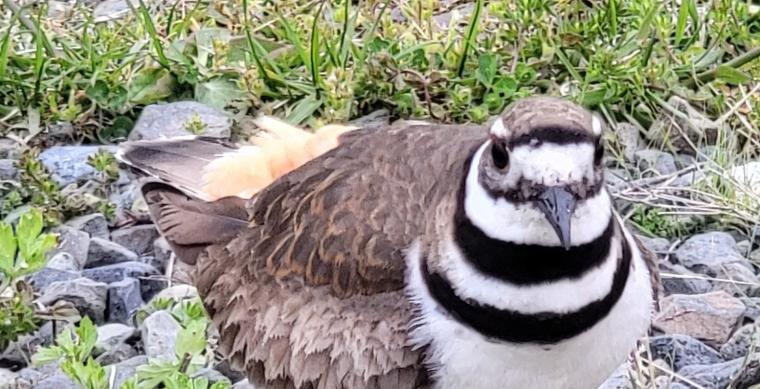
The maintenance team at the Cape May-Lewes Ferry takes pride in their landscaping skills. The most recent complement they received was from a Killdeer, who came to nest during the April 2020 Exit Zero Jazz Festival held on the wide manicured lawn behind the Cape May ferry terminal.

Killdeers are one of 66 varieties of Plovers, wading birds who live near shorelines. They’re named after their shrill call, which bird experts claimed mimicked a “kill-deer” sound. Considered one of the more verbal in the species, earlier birders simply called them Chattering Plovers or Noisy Plovers.

The largest of ringed Plovers, Killdeer are the only ones with a double ringed breast. Preferring sandbars and carefully manicured fields with vegetation not taller than 1″, the one pictured here nested on the gravel rocks adjacent to the Ferry lawn just in time to enjoy the music in late April. It’s normal for Killdeer to add rocks and light colored sticks to their nests after eggs are laid, but in this case the bird already had a perfect set up with the rocky gravel bordering the tightly cropped lawn.

Image
Killdeer closeup

Now appropriately named Jazzy by the terminal maintenance team, the bird was guarding three eggs that hatched in late May 2021. It’s not unusual for Killdeer to nest close to people, as they are fond of human-modified habitats including gravel rooftops. It does, however, make them particularly vulnerable to harm from pesticides, car accidents and building collisions.

Seasonal Sightings

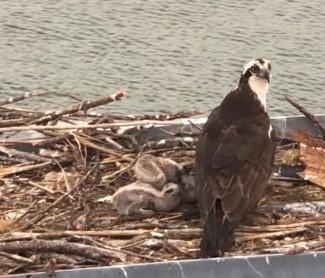
The Killdeer now join Gannets and Red Knots as recognized heralders of Spring at the Ferry, with the other species commonly sighted on the Delaware Bay in May. Osprey are also known to build nests in April and May, with one set of Osprey parents now perennial squatters at the Lewes terminal. Each year, two Osprey take residence atop the dock in Lewes to raise their young, generally resulting in 3 chicks each year. 

Image
Osprey Mom and Chicks at Lewes Ferry terminal

The Osprey, like Killdeer, tend to be monogamous, staying mated for at least an entire year if not longer. Osprey, however, frequently mate for life. 

The fact that a Killdeer was spotted at the Ferry is not unusual as Cape May County claims to be “the center of the bird watching universe.”  It’s a bold statement, but one backed up by the fact that 325 bird species can be spotted in Cape May in a year. Since records began being kept in the 1800s, 430 species, more than half the number of species found in all of North America, have been recorded. 

If you’d like to learn more about birdwatching by season, click the button below for year-round tips and tricks.

Liked this story? Interested in other birdwatching and wildlife stories on the Delaware Bay? Here are a few related story links you might find of interest:

DOLPHINS & WHALES

OH THE THINGS YOU'LL SEE

Shipbuilding in the U.S.


The Shape of Shipyards

With the M/V New Jersey undergoing a complete lifecycle extension at the shipyard in Staten Island and the 2021 start of the Marine Master plan for the ferries of the future, it’s a good time to look at the role of shipyards.

It’s a story we don’t frequently tell and one that is both steeped in history, global defense positioning, and economic implications. If you buy a car, it’s important to know if there are mechanics and service stations nearby. Similarly, if you have a boat, it’s good to know the state of shipyards that help build and keep those boats in peak condition.


Shipyards and the Economy

Currently, there are 124 shipyards in the US across 26 states. Per a 2021 article in Maritime Executive, industry studies show shipyards support approximately 110,000 jobs across all 50 states and contribute $37.3 billion to the national Gross Domestic Product (GDP). 

An industry forecast by IBISWorld, a global business market research firm, anticipates continued shipyard growth through 2026 to support the need for defense, passenger and commercial vessels ranging from barges, submarines, tugboats, and fishing vessels to ferries like those that will be commissioned for the Cape May-Lewes Ferry. Nonetheless, the number of shipyards in close proximity to our ports that can handle our size and type of vessel are limited. 

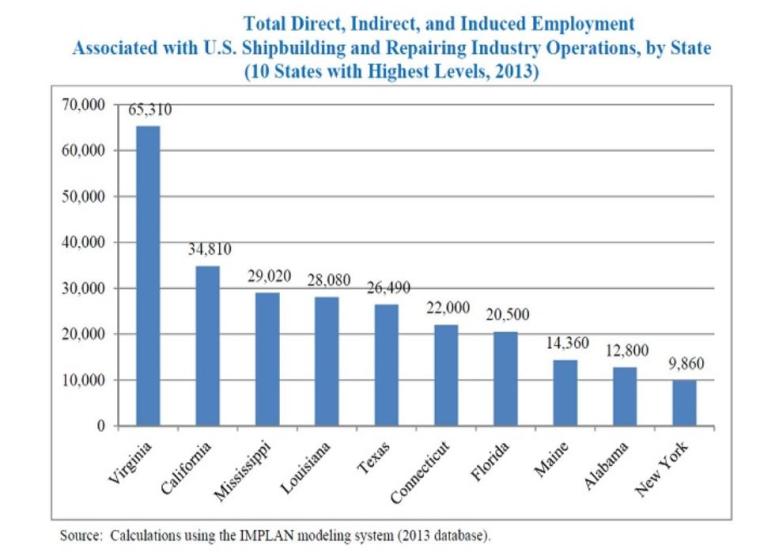
The chart below, taken from an economic study on the shipping industry in 2013 shows the top 10 states with shipbuilding capabilities, with the top 5 accounting for almost two-thirds of all private shipbuilding employment. For every shipbuilding job in the U.S., three indirect jobs are supported. Virginia, which tops the chart, is home to General Dynamics, the largest shipbuilder in the country and one that caters to specialty naval vessels. 

Image
Chart of Implan data on US shipyards

Finding Local Expertise

The lack of local resources is one of the reasons the Cape May-Lewes Ferry has a robust marine shop on premises for minor repairs. It’s why when a ferry from Martha’s Vineyard was sailing to a Chesapeake shipyard years ago and broke down in transit, repairs were done by the Cape May-Lewes Ferry team as the closest marine mechanics able to assist getting the Massachusetts ferry back underway.

Currently, the closest shipyards for larger types of mechanical repairs for our sized vessels are in Philadelphia followed by Staten Island, where the M/V New Jersey is currently being refurbished. Although some shipyards are closer to Cape May, they don’t have dry docks large enough for CMLF vessels and are generally designed to support smaller boats.

In 2017, the M/V NJ docked at Dorchester Shipyard near Port Norris, NJ —  located where the Delaware River flows into the Delaware Bay — for steelwork and painting upgrades. The repairs did not require full dry docking, and Dorchester, proud of winning the paint contract, published the YouTube video below.   

Where are the DE and NJ Shipyards?

You may notice that the current CMLF fleet carries the words “Wilmington, DE” on their bows. This is a tribute to the DRBA’s Delaware roots, but also the deep history of ferry boat building and passenger services that came out of Wilmington shipyards. Today, the Port of Wilmington is better known for cargo vessels as is the the nearby Port of Camden, but at one time both were major shipbuilding centers. 

Camden was important in WWII efforts, responsible for the launch of several legendary battleships including the USS South Dakota, USS Kitty Hawk, and 98 landing craft used at Normandy Beach. Ironically, the Camden shipyard was built in 1899 by Henry Morse, an engineer who originally wanted to have his shipyard in Staten Island but couldn’t find a suitable site. He subsequently named his Camden yard on the Delaware River — New York Shipbuilding Corporation!

Delaware’s shipbuilding history is based in Wilmington due to its proximity to both the Delaware and Christiana Rivers. At one time, there were four major shipbuilding plants along the Christiana and in WWII, Wilmington shipyards specialized in small water invasion craft and the famous Higgins boats, called the “boats that won the war.” Click the thumbnail below for a piece from CBS Sunday Morning on Higgins boats and how they were inspired by shallow draft skiffs on the Louisiana Bayou. 

Wilmington Ferry Lines

Of all the local DE and NJ shipping locations of yesteryear, Wilmington was the one that became known for shipyards that catered to ferry lines. Ferries in the Wilson Line, were built in Wilmington to take passengers up river to New Jersey and Philadelphia before rail and roadways could accommodate the traffic. The ferries specialized in day excursions. 

Today’s Debate

Today, the debate about shipyards involves the 1920 Jones Act, which requires that all goods and services shipped between US ports must be on ships built, owned, and operated by US citizens and permanent residents. Designed to stimulate shipping after WWI, many economists, defense experts and others argue it has had the opposite effect and resulted in limiting US maritime growth. 

The Jones Act has been cited in limiting trade and emergency response to Puerto Rico and affects the ability of American shipping lines to import services when needed. For future marine master planning at the CMLF, it means any boats ordered for our line will come from one of just a few available shipbuilders, as most US shipyards specialize in smaller boats or deep-water Navy vessels, with many ferry specialists currently located in Europe. This is one reason the Marine Master plans and designs provided by naval architecture consulting firm Elliott Bay must take into account shipbuilding capabilities available within U.S. shores as part of their consideration and recommendations.

Catch the Best Sunsets in the World

Ferry Passengers Ashore!

Ferry Travelers Love Beach Life

For Shore Towns in South Jersey, the amount of time and dollars visitors spend in local areas is a large part of their bread and butter. Each town knows when it’s had a good year or bad year, but not always why. In bad years, when there’s a hurricane or weather event, the effect on tourism spending is quickly recognized. Similarly, the effects of  COVID on the traveling public was immediate, devastating and easy to track.

Ironically, it’s in the good years, that it’s more difficult to determine the effects any one program or service has on the economy of an area. To help, planners at all levels — federal to local — increasingly use economic tools that integrate data from multiple sources. These models determine the value of investing in various projects from road development to grants for specialty industry and career development.

Because the Cape May-Lewes Ferry is not funded by public monies, it is not included in state and regional studies. So, in 2019, with lots of new capital projects on the horizon for the Ferry including a new Marine Master Plan, the DRBA engaged an economics consulting team to gain important information in support on ongoing economic development projects. The study found that for every $1 the DRBA invests in the Ferry operation, $20 of value is received in wages, affiliated jobs and business growth in the communities closest to the Ferry. For more on study finding details click the button below.

Passengers Stay Largely Local

In addition to the economics study, for the past several years, the marketing team at the Cape May-Lewes Ferry has been conducting monthly market research surveys of ferry passengers to learn more about where they are going after they get off the ferry. When reservations are made limited data is collected on passengers — whatever is necessary to complete a reservation, but not enough to assist in marketing efforts. In order to determine where to best advertise for future passengers and what marketing partnerships might make the most sense to provide best customer travel packages, the marketing team needed to know where people were going and what they liked to do.

The most interesting finding: Even though passengers travel as far as Canada to Florida, the vast majority leave from their homes in the mid-Atlantic and take the Ferry for vacations close to the Delaware Bay!

Top Three Destinations

For all  passengers, regardless of the time of year the top three destinations are:

  1. Cape May
  2. Lewes
  3. Rehoboth/Dewey Beach

The #4 destination varies by season with The Wildwoods taking the spot in the warmer months and Atlantic City consistently in the #4 spot in the winter and colder months.

In terms of numbers, that means that in a typical year, the Ferry brings more than 137,000 people to Cape May, 92,000 people to Lewes, 88,500 to Rehoboth/Dewey, 45,500 to Atlantic City and 44,369 to The Wildwoods. This does not include people who also stop in those towns for quick stops while passing through to destinations farther north or south.

In addition to our local hotspots, southbound passengers frequently cited Fenwick Island, Ocean City MD, Virginia Beach, Assateague and Chincoteague as top destinations. Northbound passengers said Downbeach, Brigantine, LBI, Manahawkin and other Jersey Shore points were top places visited.

Research Continues

This is the second in a series of reports we hope to issue this year on travel information supplied by ferry passengers, with the first on the topline findings of the economic report. Future reports will highlight specific attractions passengers like to visit, and estimates on how they say they sped their tourism dollars.

In June 2021, market research studies will again be conducted with new questions about passenger travel plans and desires for Ferry services. In addition, we are planning to update data on our Ferry services relative to other ferry systems in the U.S. and learn more about how we stack up against other ferry systems in terms of economic value provided to our service area.

This type of research works best with several years of data to allow for trend analysis and year over year comparisons.

Check Out The Latest Edition of the Twin Capes Traveller!

The Shipyard Chronicles: The M/V New Jersey


​A Closer Look at the M/V New Jersey’s Winter Transformation

During the height of summer, the Ferry operates upwards of twelve departures per day from each terminal, utilizing all three of our vessels, the M/V New Jersey, the M/V Delaware, and the M/V Cape Henlopen. If you’ve traveled with us this winter, however, you might have noticed that the M/V New Jersey has been absent from the line-up. If you’re wondering why that is…

She’s currently at the shipyard, undergoing a top-to-bottom transformation, including repowering, repainting, and re-engineering down to her framework and bulkhead steel. To put it in other terms, this is the ship’s equivalent of being taken down to the studs and rebuilt.

When the M/V NJ returns this spring she’ll look fresh and clean, but we wanted to give you a behind-the-scenes look at just how much work has been – and continues to be – done, both inside and outside to make that happen. Special thanks to our Assistant Port Engineer, Mike Lynch, for all the photos, and to our Port Engineer, Jeff Robert, for the details. 


Way More Than Just a Fresh Coat of Paint

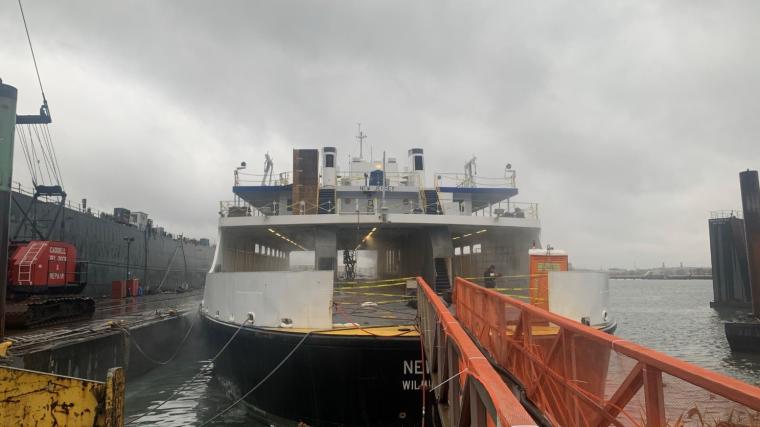
Let’s start our journey with a point of reference; here’s the M/V NJ arriving at the Shipyard back in November, looking fairly reminiscent of the last time she carried passengers across the Bay. 

Image
MV NJ arrives in shipyard for dry dock repowering 11-12-20

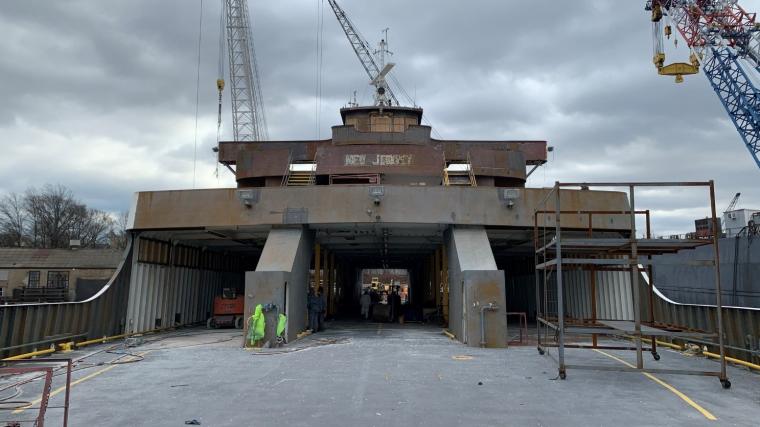
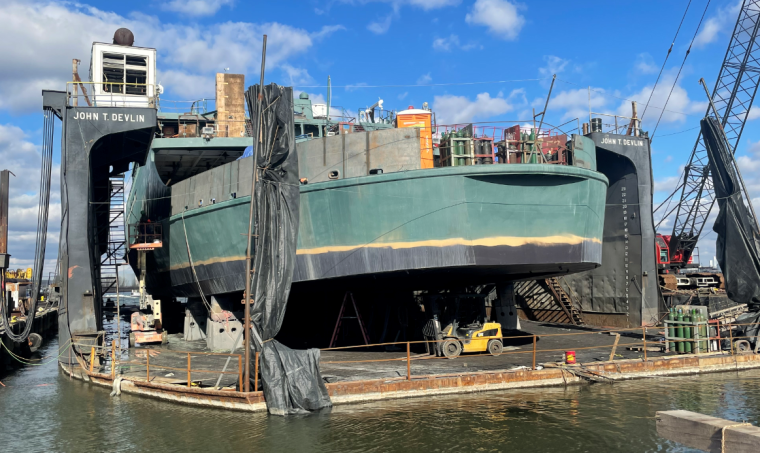
However, upon arrival, things changed quickly. Once at the shipyard, it was all about removal; stripping the paint, removing parts, and taking things down to the framework. 

Image
Ferry MV New Jersey stripped down in dry dock

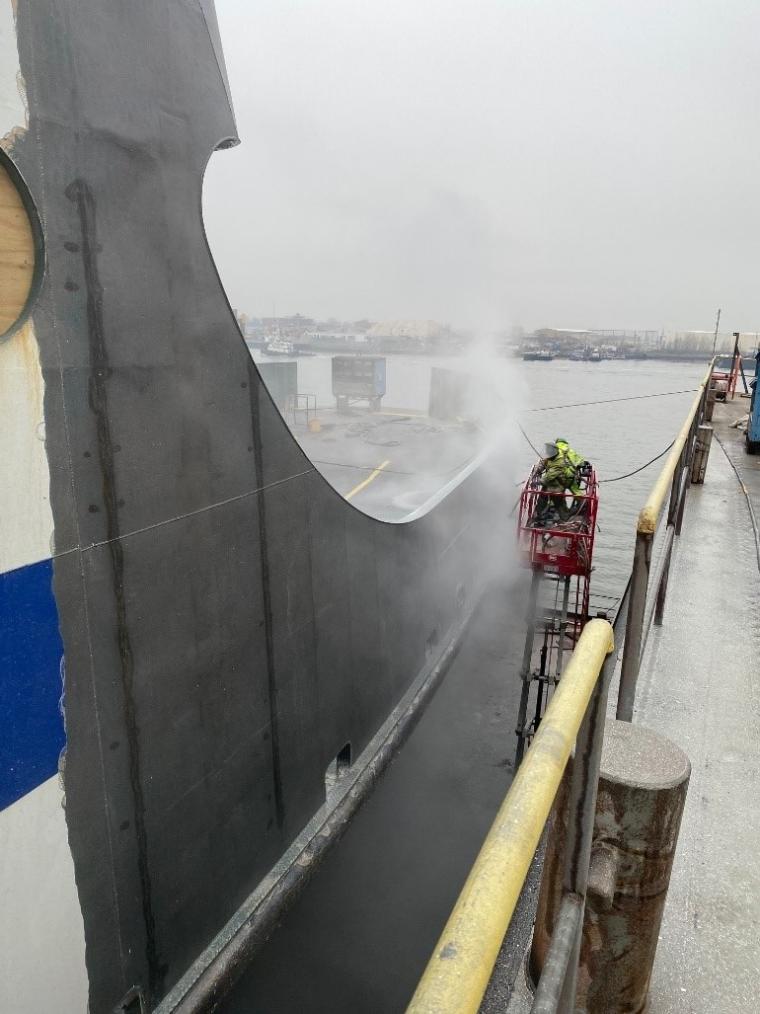
Above, you see the M/V NJ from the car deck, stripped of its usual white paint. Below, a view of hull in the process of having the paint blasted off and removed.

Image
hull paint removed outside car deck

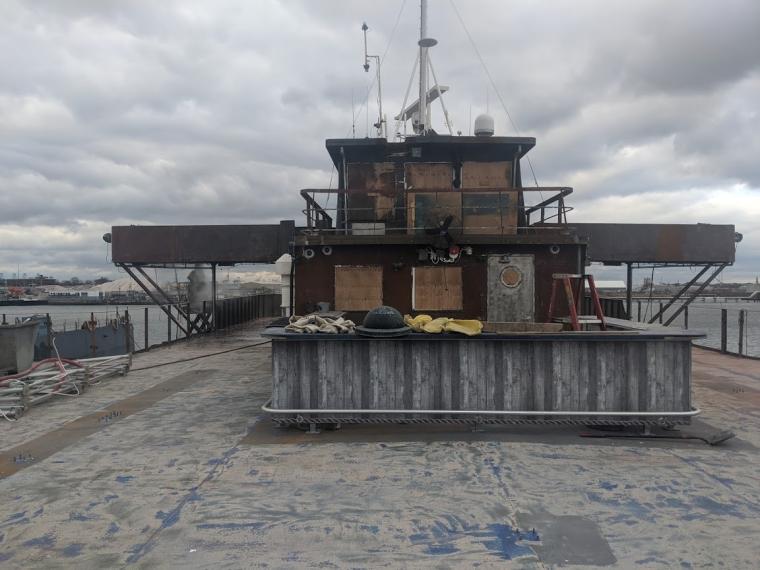
Up on the top deck, the Lido Bar and Pilot’s house were stripped down to the metal, as well as all decking and seating removed. A far cry from where you had that last Orange Crush, right? But don’t worry, the Lido Bar will be back and better than ever in time for you to kick back and enjoy one this summer. 

Image
Lido Bar stripped for repainting

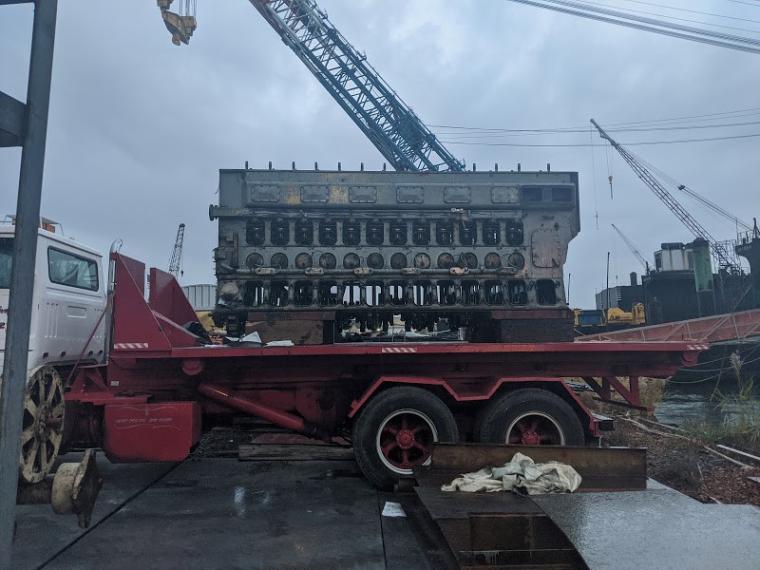
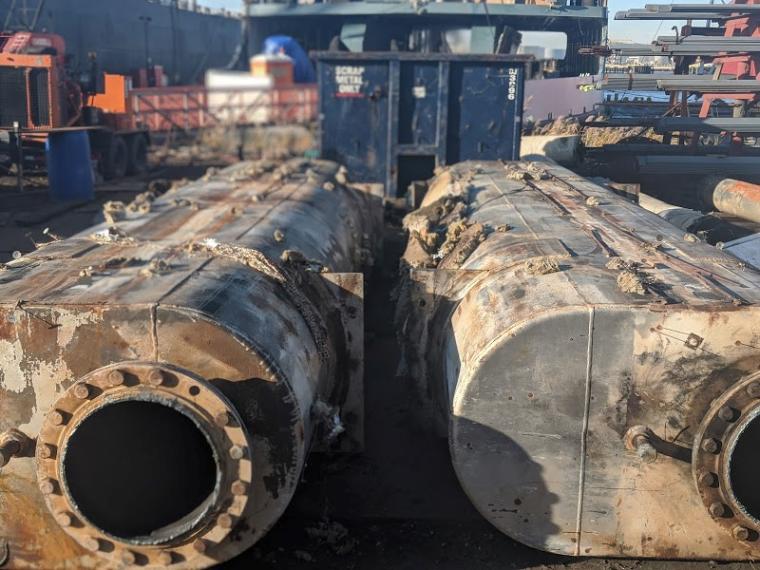
But as mentioned, this isn’t just an exterior project; it was also time to remove some pretty massive components of the vessel, including the Fairbanks Morse diesel engine, old mufflers, ballast and anchor chains, and ship stacks. 

Fairbanks Morse Engine being trucked away:

Image
Old engines taken off board

Old mufflers being removed: 

Image
Old ferry mufflers being removed

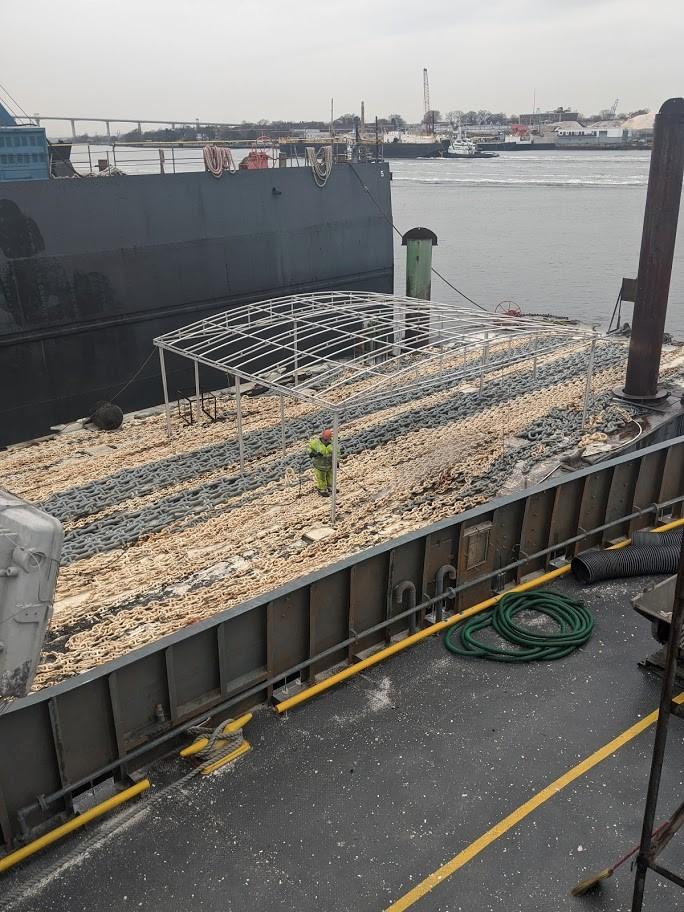
Ballast and anchor chains removed: 

Image
ballast and anchor chains laid out

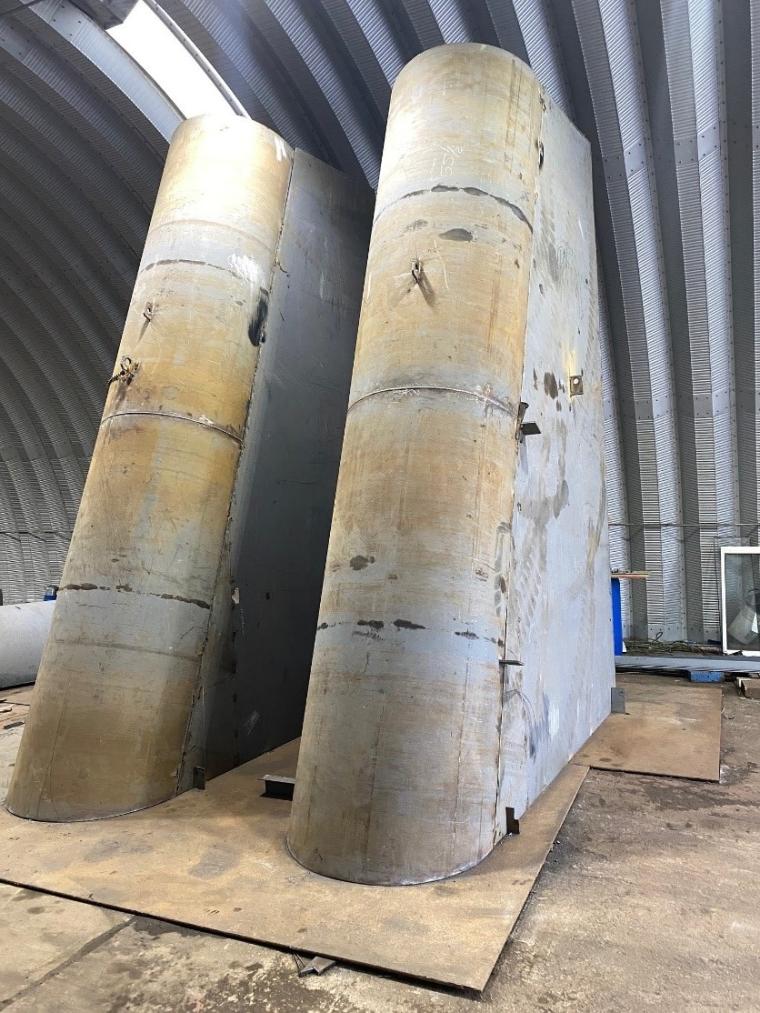
The ship stacks were also removed. Below you see the new ship stacks that are being fabricated landside, to be installed after the new mufflers go in:

Image
Ferry stacks removed for refurbishment

A Different View

So after all that removal, what does a vessel taken down to the studs actually look like? Great question! Thanks to Assistant Port Engineer Lynch, we can show you. 

Here’s a look at the engine room, stripped down:

Image
Engine room stripped down on MV NJ

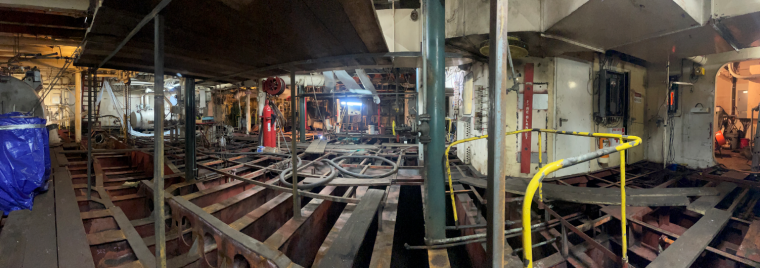
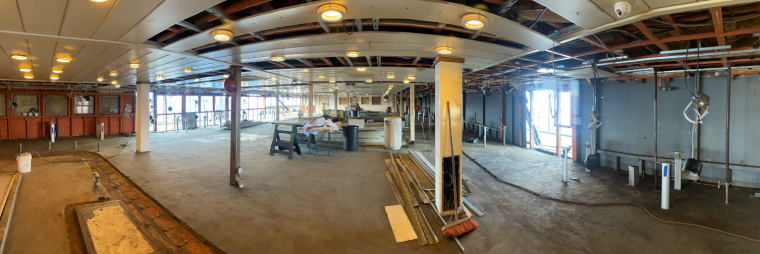
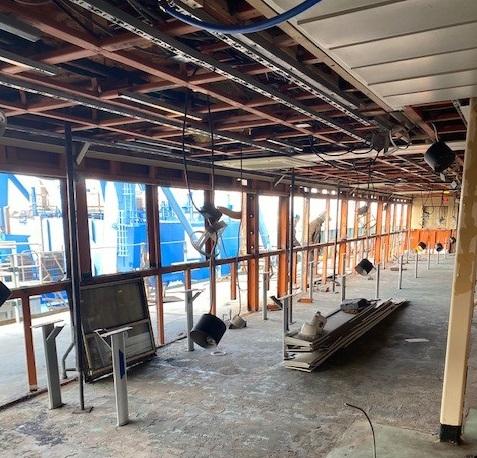
And, a look at the interior salon, which – as you can tell – looks just a bit different than the last time it had passengers in it:

Image
Panoramic view of inside salon stripped down MV NJ 2021

Another view of the salon, taken down to the studs. For reference, this is typically where you’d see tables, windows, and be able to walk out to the exterior deck. 

Image
Inside salon of MN NJ taken down to studs

Channel Your Inner Bob Ross, It’s Time To Paint!

Image
MV NJ showing various undercoats of paint in dry dock 2021

Though, this job is a lot less about happy little trees and a lot more about zinc primer and anti-foul paint. In fact, there are quite a few things unique to repainting a vessel like the M/V NJ. 

In the photo above of the vessel in dry dock, you can see examples of the many different layers that keep a boat waterproof and looking good at the same time. 

  • The top layer of gray on the car deck shows what bare blasted steel looks like. There is no paint on this layer.
  • The green section shows a layer of zinc primer which helps prevent corrosion.
  • Two additional coats of primer will applied over the zinc primer as the project is closer to the end. 
  • After the three coats of primer, a black top coat will be applied. 
  • The thin beige section shows the second coat of primer for the underwater hull.  
  • The black on the bottom is the first of three full coats of anti-foul paint that keeps barnacles off the bottom of the boat. The next coats will be red and then blue. 

As the next layers of coatings are applied, the hull markings will be painted and the final detail added to ensure crisp lines.  


Up Next…. The Rebuild

Now that we’ve taken things down, the M/V NJ needs to be rebuilt (We have the technology. We can rebuild her, better and stronger than before.)

DOLPHINS & WHALES

OH THE THINGS YOU'LL SEE

A Virtual Tour of Veterans Memorial Park

Honoring Our Veterans

November 11 is Veteran’s Day, and while we do what we can to honor our veterans here at the Ferry – including a special offer that provides veterans free transportation, free coffee, and 11% discounts on retail throughout the day – there’s no truly appropriate way to express our thanks.

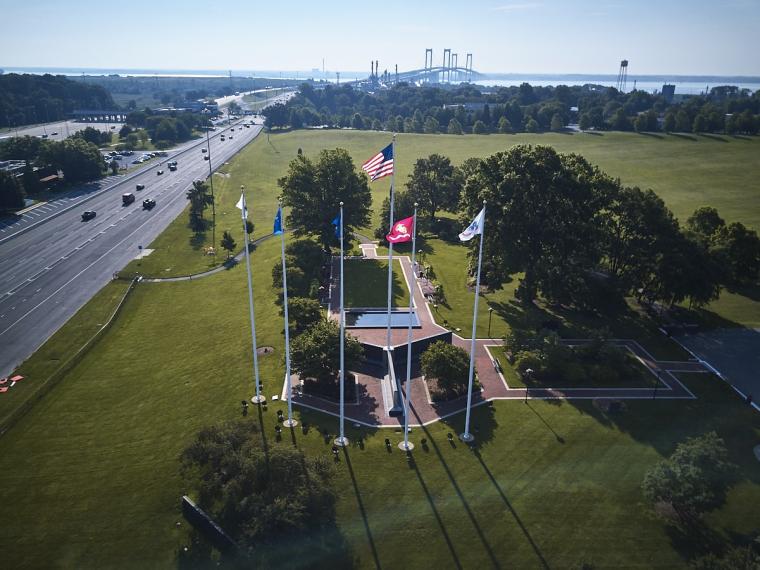
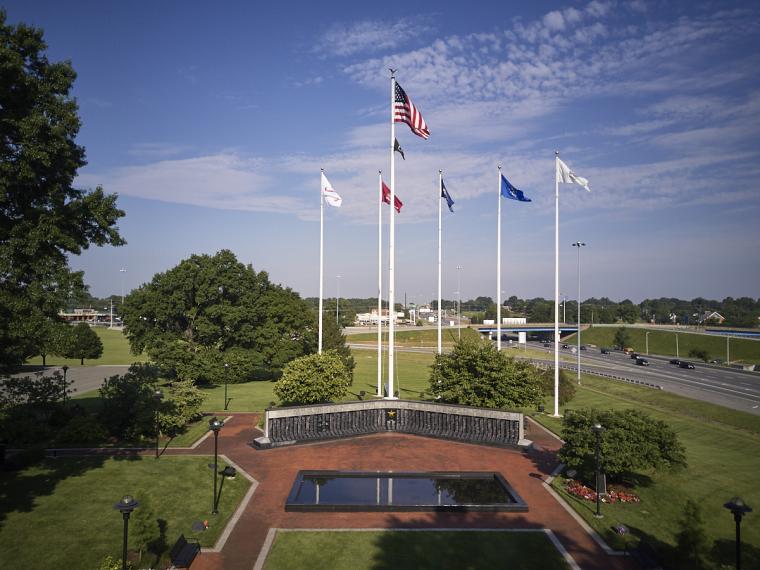
The day is typically honored at the Delaware Memorial Bridge Veterans Memorial Park (shown below) with services held by the Delaware Commission of Veterans Affairs.

If you’re unable to visit, or may not have had a chance to visit Veterans Memorial Park or spend time at each of the different monuments, read on and we’ll bring you along on a virtual tour of the Park.


The Delaware Memorial Bridge

Image
Aerial photo of Veteran's Memorial Park at the Delaware Memorial Bridge

Our virtual tour starts at the Delaware Memorial Bridge, because the bridge was named as a memorial to honor soldiers who gave their lives in WWll. The bridge was first authorized in 1945 and the first span opened to traffic in 1951.


Veterans Memorial Park

Image
Veterans Memorial Park at the DRBA's New Castle, DE campus

Veterans Memorial Park is located on the DRBA’s New Castle campus, across the highway from the DRBA complex beside the northbound lanes of I-295. The park land was set aside in 1955, before the Northbound second span was constructed. The official way to get to the park is to drive onto I-295S to Rt.9S and cross over Rt. 9 to be on Cherry Lane, with the park entrance located 200 yards down on the left. In good weather months, this is a great place to eat your lunch outside and tour the monuments.


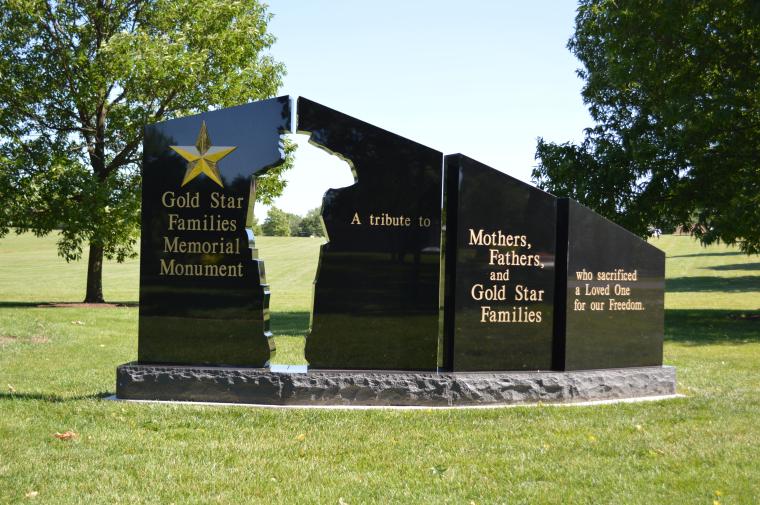
The Gold Star Monument

Image
Gold Star Family Monument Veterans Memorial Park, DE

Dedicated in November 2018, this is the newest monument in the park, built to honor the families who have lost loved ones. This smooth black granite commemorative monument features a cut out of a missing soldier. The stone reflects the landscape around it while the cutout depicts the emptiness felt when loved ones are lost in service to our country.


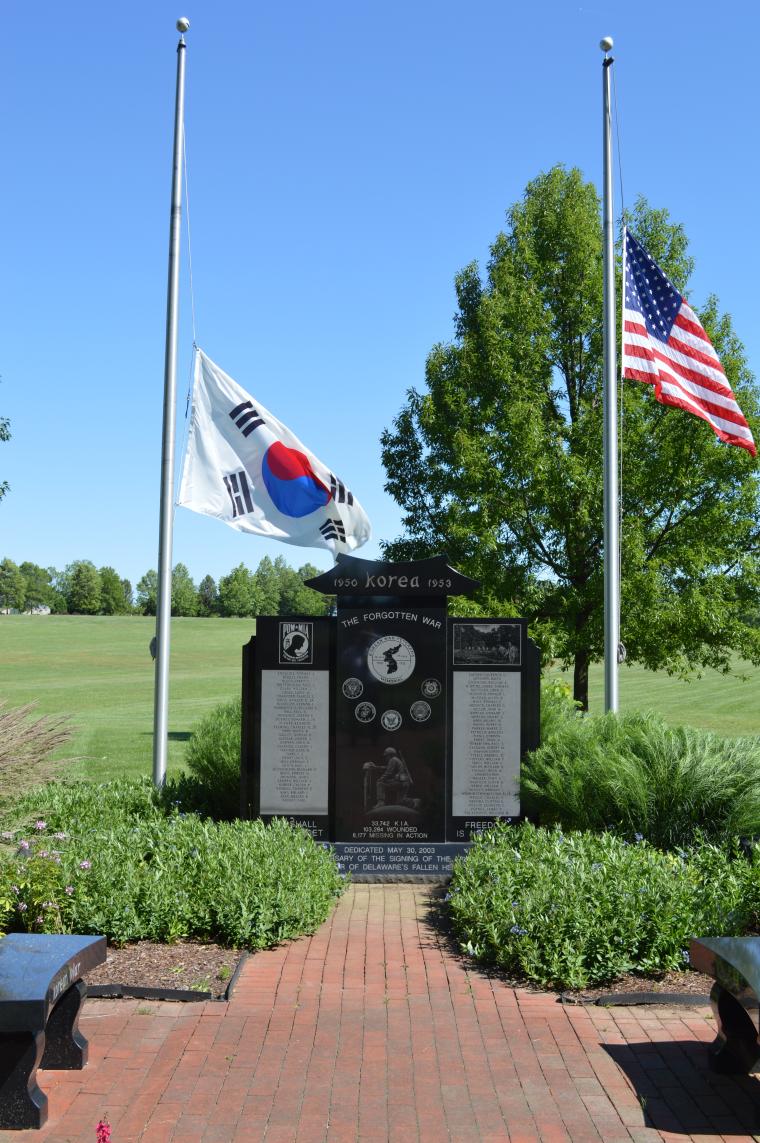
Korean Memorial

Image
Korean War Monument at Veterans Memorial Park Delaware

The next stop in the park is the Korean War Memorial, which was installed in 2003. Also constructed with smooth black granite, the monument is flanked by the South Korean and American flags. Known as The Forgotten War, the monument displays the insignias of the 5 branches of our armed forces. The Korean War waged from June 1950 until July 1953 and was among the most destructive conflicts of the modern era, with approximately 3 million war fatalities and a larger proportional civilian death toll than World War II or the Vietnam War.

Nearby, you’ll also see the “One Army” Soldier Statue, patterned after an original at the Army War College in Carlisle, PA. The statue honors all soldiers from DE and NJ who were killed, or were MIA in combat since the Korean War.


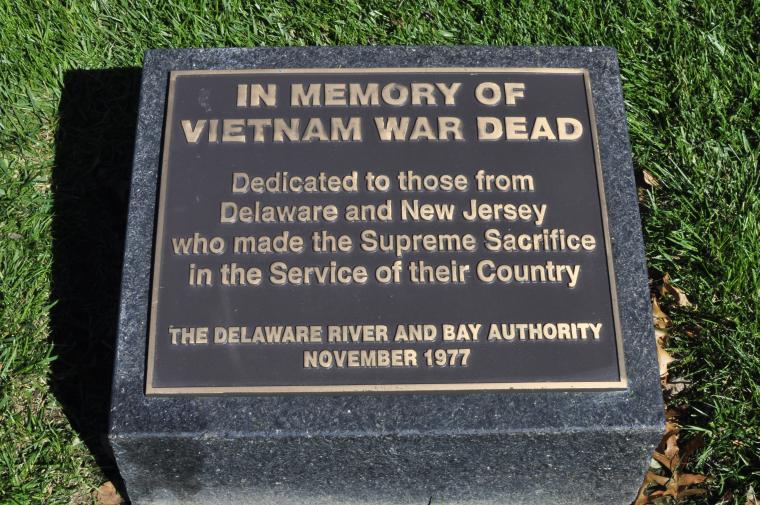
Vietnam Plaque

Image
Ground Plaque honoring Vietnam veterans in Veterans Memorial Park, DE

As you walk through the park, you’ll see a somber ground stone dedicated specifically to those who died in the Vietnam War.


Submariners Memorial

Image
Submariner monument at Veterans Memorial Park, DE

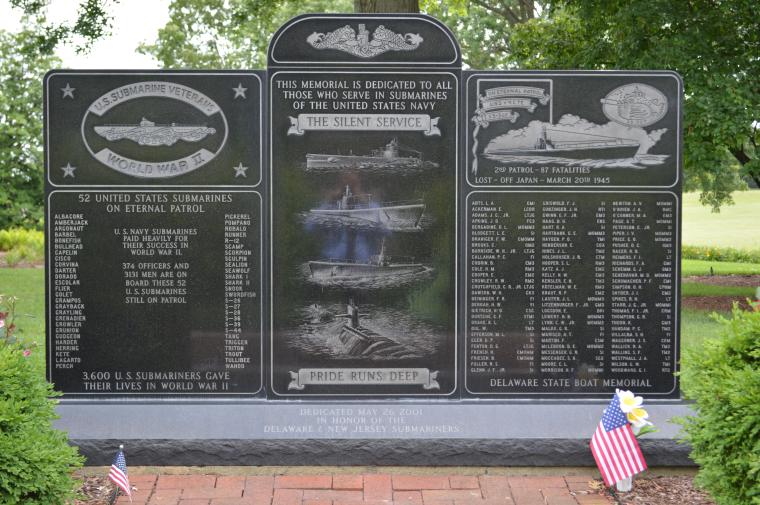
Though we’re now in the center of the park, a quick, but important turn to the left brings you to the Submariners Memorial. Submarines were integral to WWll war efforts, but were often overlooked in memorials. They became dubbed the “Silent Service,” and in May 2001, this detailed black marble monument was created to honor submariners.


Memorial Wall

Image
Memorial Wall at Veterans Memorial Park in New Castle, DE

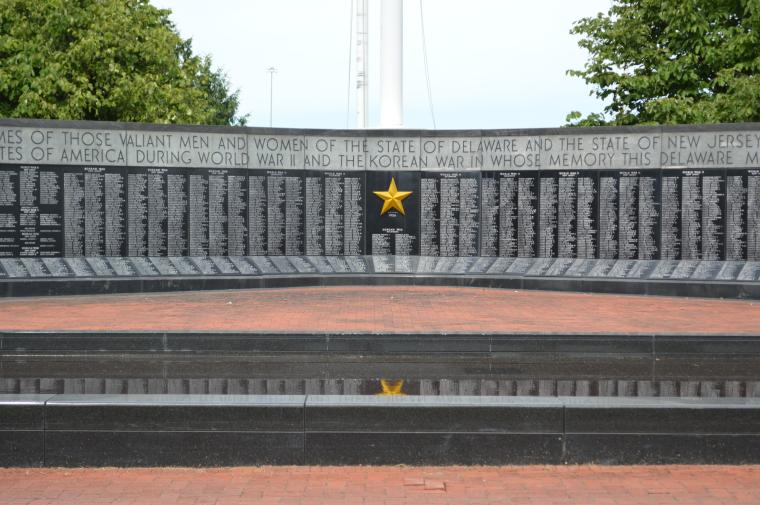
The centerpiece of the park, the Memorial Wall was dedicated in 1956, and lists the names of approximately 15,000 military personnel from both Delaware and New Jersey who paid the ultimate price in both WWll and the Korean War. Each year when in-person events are possible, services are held at the park on both Memorial Day and Veterans Day with close to 400 people in attendance, including all elected officials in Delaware.


Purple Heart Memorial

Image
Purple Heart Memorial

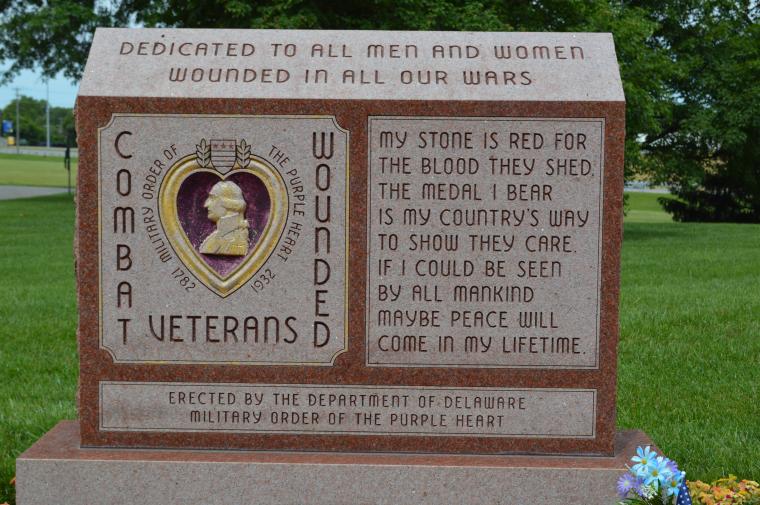
The Purple Heart Memorial is dedicated to those who were wounded in all wars. Unlike other monuments in the park, this one is made of red stone, symbolic of the bloodshed in all wars. It was erected by the Delaware Military Order of the Purple Heart, and hopes for times of future peace over combat.


Blue Star Memorial

Image
Blue Star Memorial at Veterans Memorial Park, DE

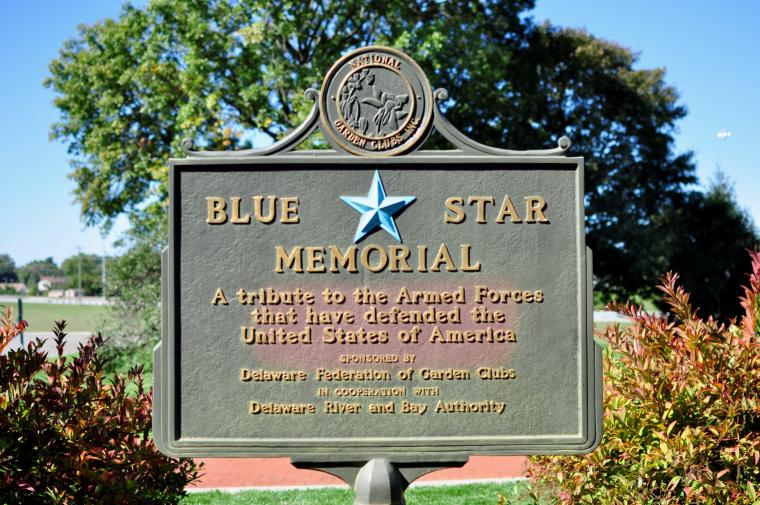
We end our virtual tour of Veterans Memorial Park at the Blue Star Memorial. The Blue Star Memorial is a tribute to the all the Armed Forces that have defended the U.S., and is a fitting final reminder. Whereas a Gold Star can be displayed by families who have lost loved ones in service to our country, the blue star is the symbol of a child in service during any period of war or hostilities. It was first introduced during WWl.

How to Be A Ferry Captain

"How can I become a Cape May-Lewes Ferry Captain?"

We get asked this question many times. In general, you start at the bottom and work your way up.

If you come to the Ferry with prior maritime experience either — say in commercial fishing, the Navy, or from a maritime academy — the process can move faster. Usually, however, deck officers start in lesser positions and some start as an entry-level deckhand or ordinary seaman (OS). This is good news for people who don’t have formal training in the industry, or young and second career folks who want to learn on the job.

The Historical Exception

Original CMLF ferry captains Billy Ray Phillips (l) and Richard Belote (r) reminiscing about early days being Ferry boat captains in Virginia and on the Delaware Bay.
Image Title
Original CMLF ferry captains Billy Ray Phillips and Richard Belote

The very first ferries used to cross the Delaware Bay for the Cape May-Lewes system came from the Virginia Ferry Corporation which operated ferries crossing the Chesapeake Bay before the construction of the Chesapeake Bay Bridge Tunnel.

Four ferries were purchased and two of the existing Virginia captains — Billy Ray Phillips and Richard Belote (l-r)– transferred to the Delaware River & Bay Authority (DRBA) to sail the boats and mentor new mariners in vessel operations.

One young crewman, Charles Belote, was Captain Belote’s son, later serving on the CMLF as an Ordinary Seaman (OS), life boat man, and Able-bodied Seaman (AB) under his dad. In 2013, Belote senior and Phillips met with the Cape Charles Historical Society to reminisce about earlier times including their joint tenure at the Cape May-Lewes Ferry during the 1960’s and 70’s (see photo above).

Today's Career Path

Regardless of the vessel, captains today go through a series of steps to reach the top bridge officer position. The training varies depending on the class of vessel and body of water being sailed, but there are some basics including a defined amount of sea time. In general, the needed experience is a few years on the specific shipping line where you want to rise to captain. As an example, ferry captains must have sailed as a mate for at least 360 days, have the proper USCG license and pilotage endorsement and, most importantly, the required experience.  

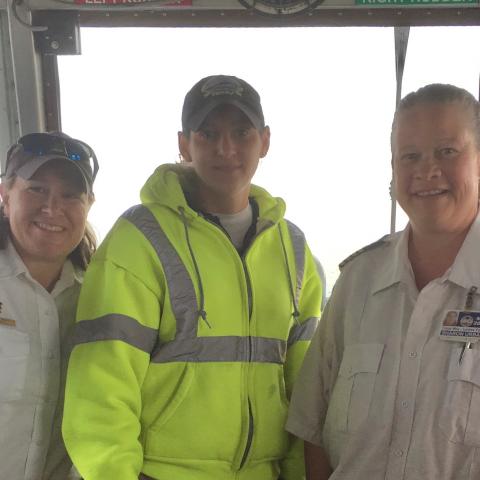
First all female bridge crew to sail across the bay - Captain Sharon Urban, Pilot Melissa Velli, and Bosun Paulette NIchols.
Image Title
First all-female bridge crew to sail across the bay – Captain Sharon Urban, Pilot Melissa Velli, and Bosun Paulette NIchols.

A captain can lead from the bridge of multiple vessels in a cruise or shipping line that are similar in category and sail on the same body of water. A Cape May-Lewes Ferry Captain, for instance, can be the senior bridge officer on any of the Cape May-Lewes Ferry vessels. But before this happens, there are two significant hurdles. 

First, a deck officer must earn a pilotage endorsement. To do this, he or she must draw the entire chart of the Delaware Bay in which the ferry operates from memory! Secondly, the deck officer spends time with other captains, and must earn their confidence — and that of the port captain — by gaining sign-off on a lengthy checklist of skills including dockings and other maneuverings in fog and rough seas/heavy traffic. Not all prospective captains succeed these tests.

It is also the reason captains from other ferry and shipping systems cannot just assume duty on the Ferry and, instead, start work as lower deck officers, progressing up the ranks when they qualify with enough sea time, licenses and experience specific to the Delaware Bay.

Although an increasing number of young mariners are coming into the maritime trade with post-secondary education or training through the Coast Guard, Navy or maritime academies, it is still a hands-on craft where experience is required in addition to book learning.

Different Life Experiences

Many Cape May-Lewes Ferry Captains first started on the water with experience in commercial fishing operations, or from family maritime businesses on the Delaware Bay. Although these local experts knew the waters, they also had to learn the operation of CMLF vessels. Recently retired Captain Dave Macomber and Port Captain Stan Hansen both came to the Ferry attracted to the better work-life balance after being in local commercial fishing, .

Two of our current bridge officers, Captains Melissa Velli and Sharon Urban, started with the Ferry working in food and retail operations. While handling these duties onboard the ferries, they learned about marine career possibilities. Both subsequently transferred to the Marine Department and started as ordinary seamen to learn operations from the bottom up. 

Image
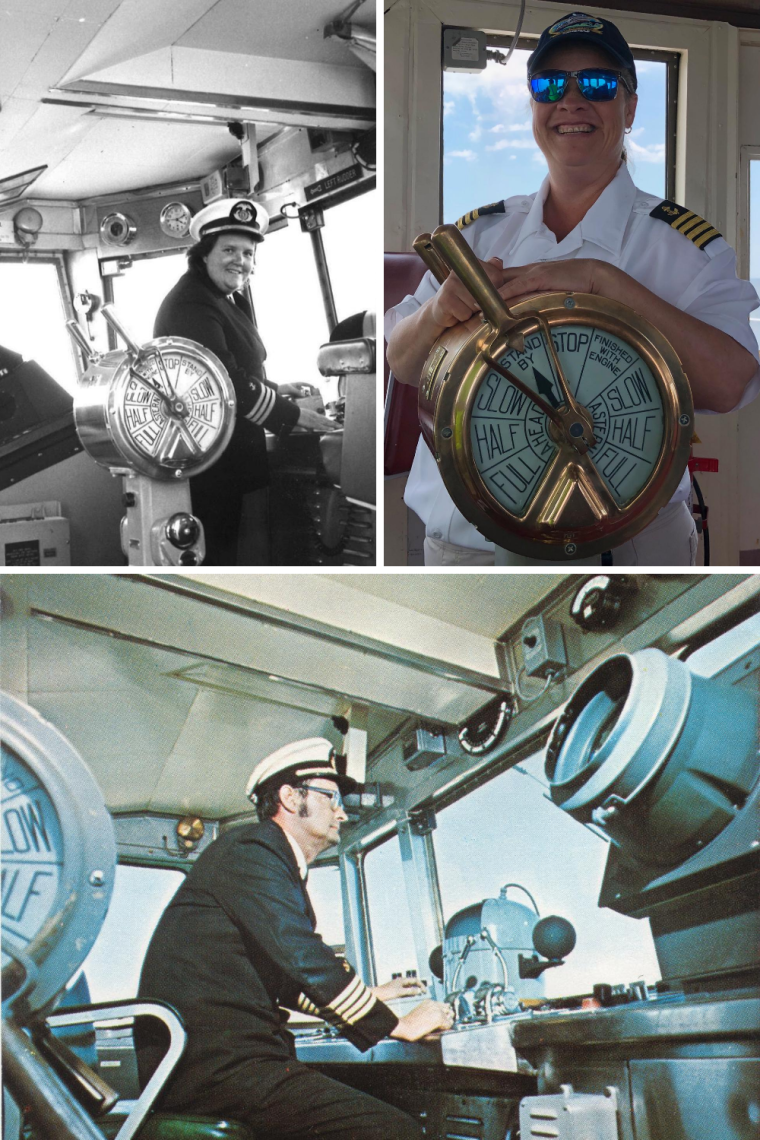
collage of first ferry captains, LInda Douglas - first female ferry captain 1991, Billy Ray Phillips - first ferry captain 1964, and Sharon Urban - first permanent female captain 2020.

Captain Urban made history on July 22, 2020 when she became the first permanent female Captain in the history of the system. In total, four women have served as captains at the Ferry, with the first being Linda Douglas in August 1991. Douglas joined the Ferry in 1982 with prior Coast Guard training to become a CMLF Captain after 9 years. Urban started in the marine division in 1997 becoming a Captain after two decades of on-the-job training. 

Two other current bridge officers, Captain Meghan Palmer and Captain Jim Harkin, came to the Ferry with different levels of marine experience. Captain Palmer was a graduate of the U.S Merchant Marine Academy were she received a BS degree in Logistics and Intermodal Transportation and earned an Ocean’s Unlimited Tonnage Third Mate’s License. Captain Palmer was hired in 2011 and qualified to sail as a Captain in 2018 after 7 years. Captain Harkin was a naval officer before coming to the Ferry and advanced to bridge captain after 6 years of CMLF experience. Their timeframes were shortened somewhat due to their prior maritime experience and credentials.

It's A Ferry Large Job!

Regardless of career track, the process takes time as each bridge officer needs to earn a United States Coast Guard (USCG) Inland Masters License of Unlimited Tonnage and an endorsement as a  USCG First Class Pilot upon the Delaware Bay License of Unlimited Tonnage. The Unlimited Tonnage refers to the largest boats possible, and is required due to the size of the Ferry vessels. Captains on the Cape May-Lewes Ferry also must be certified in CRP/First Aid, advanced marine firefighting and marine radio and radar operations.

Want to learn more about CMLF Captains?  Click on the button below to go to our Captain’s page and see their pictures. Click on the pictures to read their different stories.  

Are You Ready to Get Started?

Here are some things to keep in mind:
  1. You must be at least 18 years of age to work on the Cape May-Lewes Ferry boats.
  2. Ordinary Seamen (OS) generally start as casual (or seasonal) workers, first working a summer to see how they like it.  Many also first start as dock attendants.
  3. As full time positions open up, casual OS workers can apply for the full-time positions.
  4. Once properly credentialed at the next level of Able-Bodied Seaman (AB), OSs frequently sail up as ABs while waiting for a full-time AB position to open up. 
  5. From the AB position, mariners can train and gain credentials while on-the-job to work toward officer positions ranging from Bosuns and Helmsmen to Mates
  6. Once a Mate, a deck officer generally has gained the pilotage endorsement and can sail-up to Pilot. 
  7. Once a Pilot, a mariner has a captain’s license and can become qualified to sail as captain. Each position has its own set of requirements as officers work toward become the Master, or Captain, on the Bridge.
  8. All posts as they become open are listed on DRBA.net under Employment Opportunities.

The ferry operates year-round so there are generally a few posts always open with positions ranging from marine engineers and mechanics to food and retail personnel and ordinary seaman. If you want to work out on the water, there’s a likely a job of interest for you! Check out our hiring page to get a sense of the many ways you can join our team!

Explore Things To Do In The Area

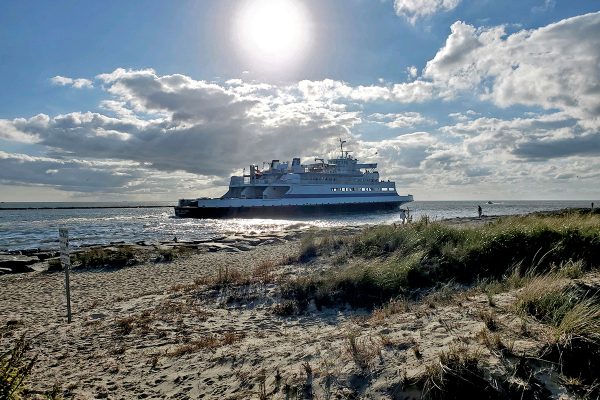
A view of the Cape May - Lewes Ferry from Sunset Beach in Cape May as she sails on Delaware Bay
Destinations Icon
Things To Do
November 21, 2025

New Year, New Adventures: 10 Ferry Travel Resolutions for 2026

simple_banner_linkedin_post_header
Travel Stories Icon
Travel Stories
February 26, 2024

Honoring Black Mariners

Search in CMLF

Cape May Lewes Ferry

Subscribe to our newsletter

Booking Form