A Bird Named Jazzy


The Killdeer Who Stole The Show

The maintenance team at the Cape May-Lewes Ferry takes pride in their landscaping skills. The most recent complement they received was from a Killdeer, who came to nest during the April 2020 Exit Zero Jazz Festival held on the wide manicured lawn behind the Cape May ferry terminal.

Killdeers are one of 66 varieties of Plovers, wading birds who live near shorelines. They’re named after their shrill call, which bird experts claimed mimicked a “kill-deer” sound. Considered one of the more verbal in the species, earlier birders simply called them Chattering Plovers or Noisy Plovers.

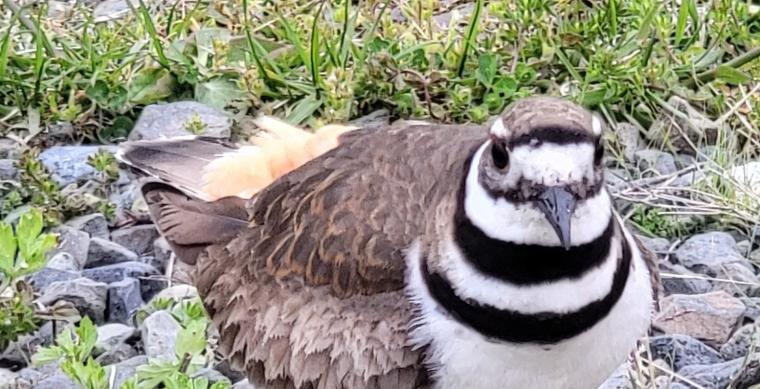
The largest of ringed Plovers, Killdeer are the only ones with a double ringed breast. Preferring sandbars and carefully manicured fields with vegetation not taller than 1″, the one pictured here nested on the gravel rocks adjacent to the Ferry lawn just in time to enjoy the music in late April. It’s normal for Killdeer to add rocks and light colored sticks to their nests after eggs are laid, but in this case the bird already had a perfect set up with the rocky gravel bordering the tightly cropped lawn.
Image
Killdeer closeup

Now appropriately named Jazzy by the terminal maintenance team, the bird was guarding three eggs that hatched in late May 2021. It’s not unusual for Killdeer to nest close to people, as they are fond of human-modified habitats including gravel rooftops. It does, however, make them particularly vulnerable to harm from pesticides, car accidents and building collisions.

Seasonal Sightings

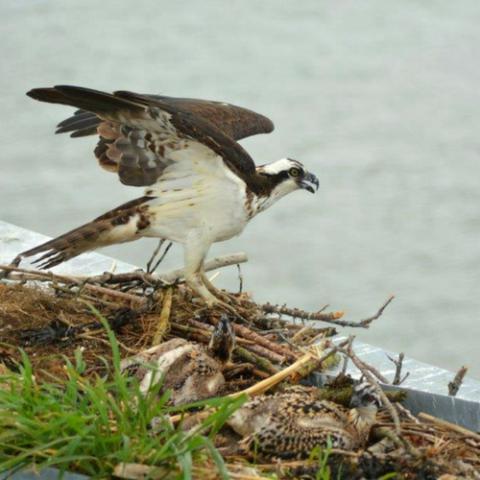
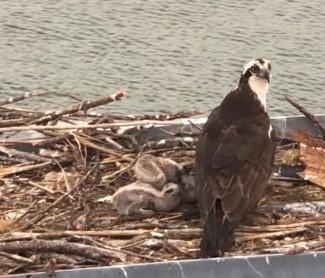
The Killdeer now join Gannets and Red Knots as recognized heralders of Spring at the Ferry, with the other species commonly sighted on the Delaware Bay in May. Osprey are also known to build nests in April and May, with one set of Osprey parents now perennial squatters at the Lewes terminal. Each year, two Osprey take residence atop the dock in Lewes to raise their young, generally resulting in 3 chicks each year. 
Image
Osprey Mom and Chicks at Lewes Ferry terminal

The Osprey, like Killdeer, tend to be monogamous, staying mated for at least an entire year if not longer. Osprey, however, frequently mate for life. 

The fact that a Killdeer was spotted at the Ferry is not unusual as Cape May County claims to be “the center of the bird watching universe.”  It’s a bold statement, but one backed up by the fact that 325 bird species can be spotted in Cape May in a year. Since records began being kept in the 1800s, 430 species, more than half the number of species found in all of North America, have been recorded. 

If you’d like to learn more about birdwatching by season, click the button below for year-round tips and tricks.
Liked this story? Interested in other birdwatching and wildlife stories on the Delaware Bay? Here are a few related story links you might find of interest:

DOLPHINS & WHALES

OH THE THINGS YOU'LL SEE

Red Knots & Horseshoe Crabs | Delaware Bay Migration Spectacle

Experience Amazing Wildlife On the Delaware Bay

The Delaware Bay is a birdwatcher’s paradise, and the decks of the Cape May-Lewes Ferry provide some of the best viewing opportunities around. And, just beyond the decks of the Ferry, up the coast from the Cape May Terminal, one of the most amazing happenings in the birdwatching world takes place each spring.

Red Knots

Have you ever heard of a Red Knot? No, we’re not talking about pulling apart a Twizzler and tying it, as much fun and as delicious as that might be. We’re talking about the Red Knot, a migratory shorebird that travels over 9,000 miles annually between South America and their breeding grounds in the Arctic. If you’re wondering, 9,000 miles is roughly the equivalent of 529 trips across the Delaware Bay between Cape May and Lewes.

Beyond their aptitude for long-distance travel, the shores of the Delaware Bay here in New Jersey play an important role in the Red Knots’ migration. And the reason is something you might not expect: Horseshoe Crabs.

Red Knots & Horseshoe Crabs

Horseshoe crabs? What do those pre-historic looking creatures have to do with a 9,000 mile Red Knot migration? Great question! The Nature Conservancy does a great job of explaining it in detail here, but the cliff notes version is that during May and June each year, Horseshoe crabs spawn along the coastline of the Delaware Bay, and because the timing coincides with their migration, hundreds of thousands of Red Knots show up to stuff themselves on an all-they-can-eat buffet of horseshoe crab eggs. The feast allows them to refuel, and provides them with the energy they need to continue on their journey up to their breeding grounds in the Artic.

This stop on their migration only happens here on the shores of the Delaware Bay, so if nature is your thing, make sure to add this to your bucket-list this spring!

To book your Ferry travel to see the Red Knot migration, click here.

You might also be interested in:

 
DOLPHINS & WHALES

OH THE THINGS YOU'LL SEE

Check Out The Latest Edition of the Twin Capes Traveller!

Year-Round Birdwatching on the Cape May–Lewes Ferry

What Expert Birdwatchers Look for Year-Round 

The Delaware Bay is a unique habitat providing a wealth of birdwatching opportunities. But what are you likely to see?

Image
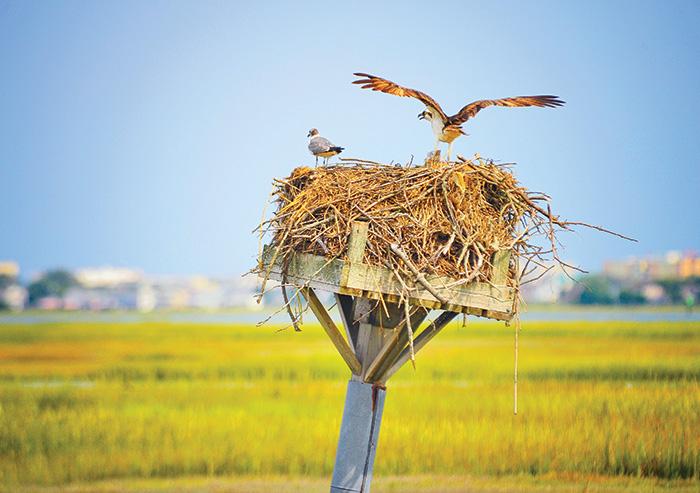
Ospreys nesting in Cape May County Wetlands

We asked two Bay birdwatching experts for their advice on best times and tips to enjoy birding either while on the Ferry or the shores of the Delaware Bay. Thanks to Scott Barnes who oversees the NJ Audubon’s Young Birds Club, and Bill Stewart, Director of Conservation & Community for the American Birding Association in Delaware for their insights.

Q: What type of birds are people most likely to see on the Bay?

Stewart: During the spring and summer months, keep a look out for Parasitic Jaegers, a falcon-like open water bird that loves to chase and steal food from other birds, hence their name! You will also see lots of gulls and terns following the ferry.

Barnes: Most often passengers will be looking at waterbirds – everything from loons to ducks, gulls and terns. From late fall through early spring there are often hundred of Red-throated Loons, Surf Scoters, and Black Scoters. Summertime months bring a variety of gulls with Laughing Gulls being the most numerous, but you can also spot Brown Pelicans and several varieties of terns.

Q: Are some birds more likely to be seen on the Ferry than on shore?

Barnes: In some years, the ferry can be a good place to search for Wilson’s Storm-Petrels and other “pelagic” species that don’t usually come close to land.  After strong storms with onshore winds, some lucky birders have seen shearwaters, another sea bird not often seen from land.

Stewart:The month of March is probably the most exciting with big and beautiful Gannets migrating north. It is common to see a few hundred near and directly following the Ferry. It’s very rare to see Gannets from land.

When most media outlets pay attention to Punxsutawney Phil to find out if spring in imminent, ferry folks pay attention to sightings of Gannets by the Ferry Captains. When ship logs take note of Gannets, the Ferry teams cheer and start to break out spring clothing!

Q: What is a good age to start birding?

Stewart: ANY AGE!!! The earlier the better, especially for hearing and listening for the birds.

Barnes: Whenever someone is interested. NJ Audubon does birding for tots on up.

Q: What are some good resources for local birders?

Barnes:  The NJ Audubon Young Birders Club, eBird from the Cornell Lab of Ornithology, and the NJ Birders Facebook Group.

Stewart: Only a few miles from each ferry terminal young birders can find the Cape May Bird Observatory in Cape May Point and the Nature Center at Cape Henlopen State Park. Both locations have a wealth of information on local bird happenings and many bird books to purchase.

Q: Are there specific programs for young birders?

Stewart: The American Birding Association hosts numerous young birder events, workshops, contests, mentoring opportunities and summer camps.  Once a year, our youth camp boards the Ferry to teach passengers about Delaware Bay birds. For more information, contact the American Birding Association in Delaware City, DE.

Barnes: The NJ Audubon young Birders Club runs birding trips year-round (about 1-2 trips/month) across the state. They are designed for kids ages 11-17 and their parents. We go to hotspots around the state from Cape May to the Delaware Water Gap.

Photo Credit: Special thanks to photographer Beate Pohlig of Cape May for sharing the header photo taken March 2018 during an early spring birdwatching expedition that took her across the bay on the Ferry.

What to Bring to Birdwatch on the Ferry

Delaware Bay: A Birdwatcher's Paradise

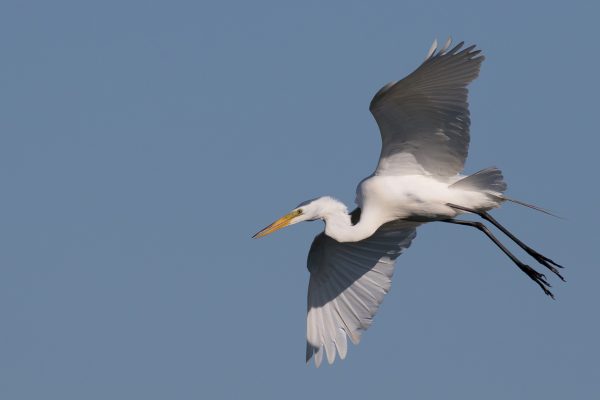
The Delaware Bay is a birdwatcher’s paradise because it is one of the greatest places in the country to see a large and diverse collection of birds. Thankfully, the Ferry can put you right in the middle of the beautiful bird wonderland! On the Ferry, we’ve seen egrets, laughing gulls, osprey, gannets, the occasional bald eagle, and much more, since the bay is always flapping with flying wildlife. Whether you’re an experienced birder, or just a traveler admiring the aviary display, here’s what you’ll need to birdwatch on the Ferry.

Beginner

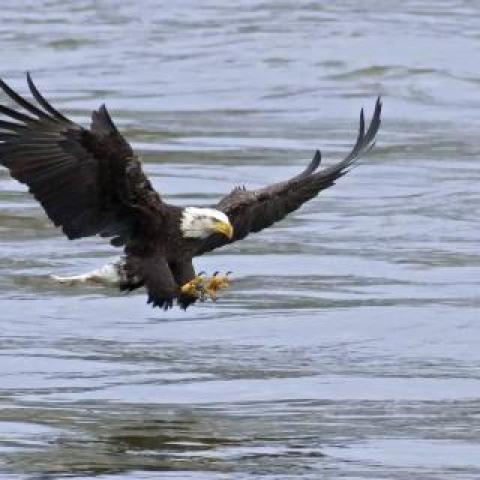
Bald Eagle

If you’re a beginner birdwatcher, enjoying all the birds that the bay has to offer doesn’t take much at all. But, those summer days will leave you burnt without the proper sunscreen. This is always a necessity no matter what level birder you are! Check out our wildlife scorecard, available on deck, to keep track of all the marine life you see. Information includes what each species likes to snack on, what time of year is best to spot them and even a fun fact or two. Depending on the season, you’ll see a variety of birds. In the springtime, an osprey couple typically lays three eggs by our Lewes Terminal, making for a great attraction! By the time summer comes around, the babies are hatched and ready to take their first flight.

Intermediate

If you’ve dabbled in bird watching, bringing a backpack is a great idea to keep your hands free for holding binoculars or a camera. In the Springtime, hundreds of thousands of migrating shore birds feast on new horseshoe crab eggs that line the Delaware Bay shoreline. You may be able to spot the Red Knot that breeds as far north as Canada. In order to spot some of these migrating birds we suggest that any intermediate birder to bring a field guide to spot the variety of species. We also advise birders to wear long pants and closed toes shoes when exploring any wetlands and marshes.

Ferry Osprey

Expert

If you’re an expert birdwatcher, chances are you don’t need us to tell you what to bring along! You may already have one or more field guides and own a pair of binoculars. If you’re bringing a camera, we also recommend a tripod for stability when the boat is rocking.

No matter your skill level, the Cape May-Lewes Ferry provides 360-degree views of Delaware Bay wildlife like you’ve them never seen before. Stop on either side to experience the natural habitat of Cape Henlopen State Park in Delaware or Cape May Point State Park in New Jersey. The biodiversity on the a Delaware Bay attracts visitors from all over to explore our wetlands, beaches and woodlands.

Birdwatching & More

Bird flying overhead
Destinations Icon
Things To Do
October 10, 2022

​The Best Birding in Cape May and Lewes

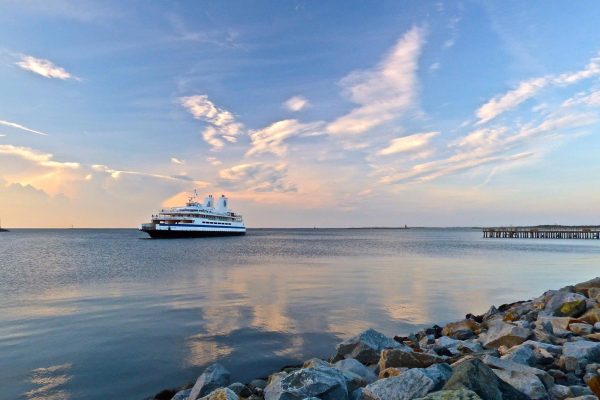
Cape May - Lewes Ferry on Delaware Bay at Sunset
Things To Do Icon
Things To Do
May 10, 2019

55 Reasons To Sail The Cape May-Lewes Ferry

DOLPHINS & WHALES

OH THE THINGS YOU'LL SEE

Search in CMLF

Cape May Lewes Ferry

Subscribe to our newsletter

Booking Form